
Disposable Cameras vs. Digital Wedding Photo Sharing: The Real Cost Breakdown
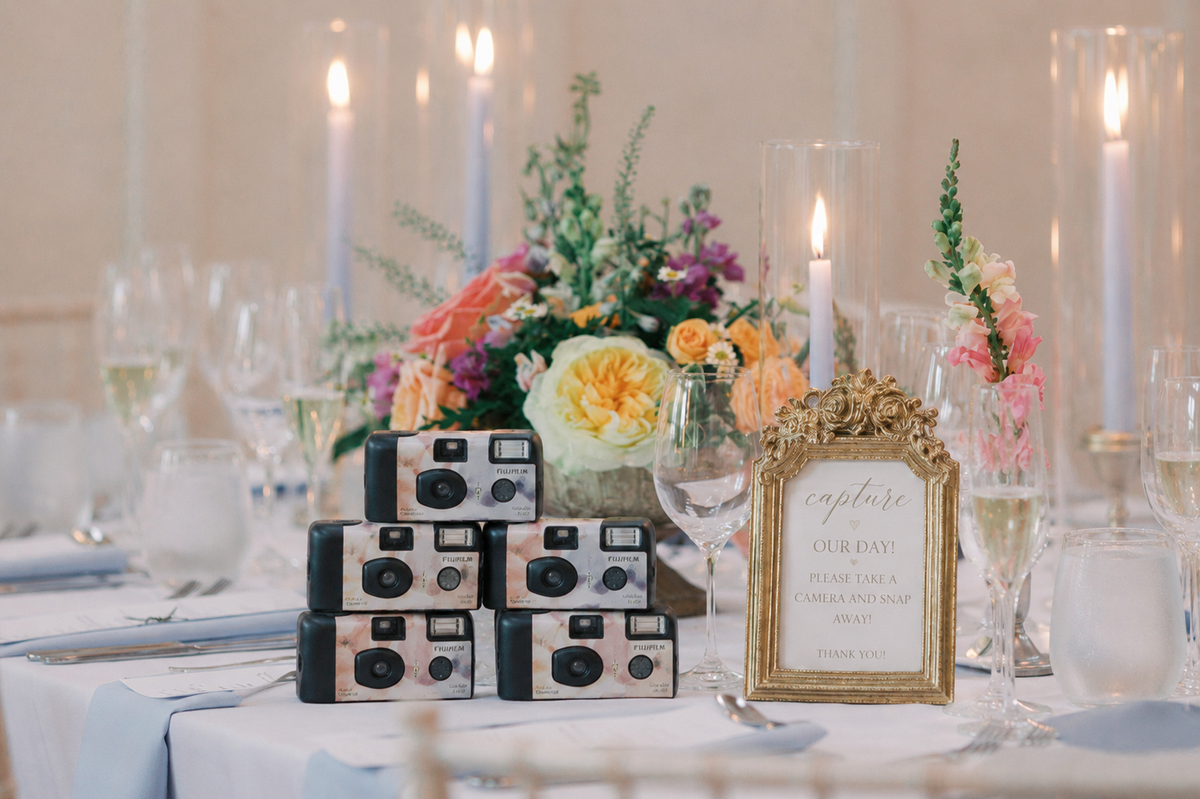
A disposable camera on Amazon lists for $10 to $14. That's the number that shows up when you're building a wedding budget spreadsheet, and it's the number that makes "put a camera on every table" feel like a five-dollar decision. It isn't. By the time a roll of film turns into photos you can actually look at, the real cost runs three to four times higher — and there's still no guarantee the pictures come out.
What a disposable camera setup actually costs
Most weddings that go this route order somewhere between 15 and 30 cameras — roughly one per table. Buying in the bulk packs sold specifically for weddings, rather than the drugstore single-unit price, runs $15 to $25 per camera. That's $225 to $750 before a single photo has been taken.
Then it has to be developed. Drugstore processing runs $13 to $18 per roll for prints and a basic scan; a professional lab charges anywhere from $8 to $22 depending on scan resolution. Either way, add another $12 to $20 per camera on top of the purchase price.
All in, a 150-guest wedding running 20 cameras lands somewhere around $575 to $960 — for photos nobody has seen yet, delivered anywhere from a few days to a few weeks after the wedding.
What that money actually buys
A 27-exposure disposable camera doesn't produce 27 keepers. Between guests who don't realize there's no flash warning, ones who forget to advance the film, and the one camera that gets left in a jacket pocket until August, real-world usable shots run closer to half a roll — call it 12 to 15 photos per camera that are actually in focus and worth keeping.
The default scans from a drugstore are 1 to 4 megapixels — fine for a group text, rough for anything bigger than a postcard print. Higher-resolution scans exist, but they push the per-roll cost toward the top of that range.
And every one of those photos was taken blind. Nobody — not the couple, not the guest who took it — knows what's actually on the roll until it comes back from the lab. If a camera goes missing before it makes it to developing, and at any given wedding at least one does, those photos are simply gone.
What the digital version costs
The camera guests already have in their pocket doesn't need to be purchased, shipped, or developed. That's the core of the cost difference: a disposable setup means buying a camera for every table; a QR code gallery like Vutore uses hardware guests already paid for and already know how to use.
Photos land in the gallery at whatever resolution the guest's phone shoots — for most phones sold in the past five years, that's well above what a drugstore scan delivers. There's no waiting on a lab. A guest uploads during the reception, and the photo is in the gallery in the same minute.
Where disposable cameras still make sense
To be fair to the disposable camera: it doesn't need a QR code, a phone, or a signal, and it produces a specific look that a phone camera doesn't replicate. If a wedding is genuinely off-grid, or the couple wants the unpredictability of consumer film as a deliberate aesthetic choice, that's a real reason to buy a few. It's closer to a party favor than a photo-collection strategy, and there's nothing wrong with buying nostalgia on purpose — just don't count on it as the main way you'll get your guests' photos back.
The verdict
If the goal is actually collecting the photos your guests take — reliably, in focus, at a resolution worth printing — the math doesn't favor the disposable camera once developing costs are on the table. If the goal is the specific texture of film photos as a keepsake, put a couple on the tables for fun and let a QR code gallery handle the actual job of collecting everyone's pictures.